


Two quotes for the same party may seem incomparable: one costs 400 euros and the other is over 1,000. Before deciding that one is cheap and the other expensive, there is one question worth asking: do they include the same things?
Perhaps the first one covers the event and uses the venue’s equipment. The second might provide sound, lighting, a control booth and a member of staff to help with set-up. Or perhaps the difference lies in experience, the number of hours booked and the preparation work. Looking at the final figure alone does not make it possible to tell the difference.
Let’s get things straight: what prices you can expect in Madrid, what varies depending on the occasion, and what you should bear in mind to ensure you book with peace of mind.
Table of contents
A starting point for crunching the figures
For a simple private party in Madrid, you can use the following range as a guide: €400 to €900. A service with more comprehensive sound and lighting can be held at €800 and €1,500. There are options at the lower end and productions well above that: the venue, the time slot and whatever you want to cover make all the difference.
| What you’re signing up for | Guidance | Before comparing |
|---|---|---|
| An entry-level option, with straightforward service | €200–400 | It is a national benchmark in the budget segment. It assesses working hours, materials and preparation. |
| A small private party in Madrid | €400–900 | Usually around 3–4 hours. Sound may be included or provided by the venue. |
| DJ, sound and lighting – the full package | €800–1,500 | Check that assembly, warranty and delivery are included. |
| A bigger party | €800–1,800 | As a guide for 100–300 people; the venue may affect the requirements. |
| A corporate event | €700–2,500 | The script, production and screen time can be just as important as the shoot itself. |
| A top-billed artist or a festival format | From €3,000 | The booking of performers can be handled separately from the technical production. |
These figures provide a guide to the market; they are not Aleea’s rates nor a statistical average. Quotes do not always include the same items or taxes. Always ask for the total cost for your specific date and set-up.
A wedding doesn’t require the same things as a business dinner
A party at home, a birthday or a private celebration
A restaurant with equipment already in place may mainly require a DJ and their musical repertoire. In an empty house or country property, you’ll need to bring in sound equipment, find a suitable location and ensure there’s access for setting it up. Even with the same number of people, the work involved can be very different.
Also think about what the celebration will be like. Providing entertainment for a dinner and then two hours of dancing afterwards isn’t the same as keeping the dance floor full all night long. If several generations are attending, it’s a good idea to discuss their tastes from the outset, rather than waiting until someone comes up to request a song.
A wedding: just the reception or the whole celebration
The key difference is Which events do you want to cover?. Booking an open bar does not automatically include the ceremony, the drinks reception, the reception and the dance. Each stage requires additional time, coordination and, in some cases, a separate venue.
General price ranges for wedding music in Madrid are approximately between €400 and €1,500, but these cover a wide variety of formats. It is not advisable to use this figure as the price for a DJ for the whole day: a long event, multiple venues or musicians can easily exceed the cost of a standard package.
Imagine a ceremony in the garden and a reception inside the hall. Both teams may need to be ready before the guests arrive. Moving the speakers during the cocktail reception is only a good idea if the timing and access allow it to be done without disrupting the celebrations.
What’s more, there are inputs, microphones and songs that require a precise signal. If you’re at that stage, you can take a look at How we organise a wedding at Aleea to find out what should be agreed upon.
A presentation, a company dinner or an awards ceremony
Here, music can shift from accompanying a conversation to providing a backdrop for an entrance, making way for a speech and then getting the party started. If there are videos, presentations or award ceremonies, it’s important to know who is in charge of the audio for each segment and who gives the cues.
Appearances matter too. A tidy control room, neatly organised cabling and a look and feel appropriate to the event all have an impact on the photographs and the overall impression. You don’t need a grand stage to pay attention to these details.
A restaurant, a hotel or a terrace
In a live music session, continuity and a comfortable sound level are usually more important than the use of lighting effects. Before adding equipment, you need to check how it sounds at the mixing desks and what the existing set-up allows for. A series of regular sessions is also not directly comparable to a one-off booking.
The items worth examining closely
An extra doesn’t necessarily have to be a surprise. The quote should make it clear what’s included in the package and what’s only added if you need it. These are the items that cause the most confusion.
Sound: making sure it reaches its intended destination clearly
Renting a basic piece of equipment can cost, as a rough guide, €200–600. Don’t add it if the package already includes a suitable system. Ask which areas it will cover and whether it includes the necessary microphones.
The shape of the room, the distance between guests, the acoustics and the use of the space are more important than a wattage figure. At a dinner party, you want to be able to hear each other speak; on the dance floor, a different experience is required. The set-up must cater for both when they share the same space.
The cabin and the appearance of the assembly
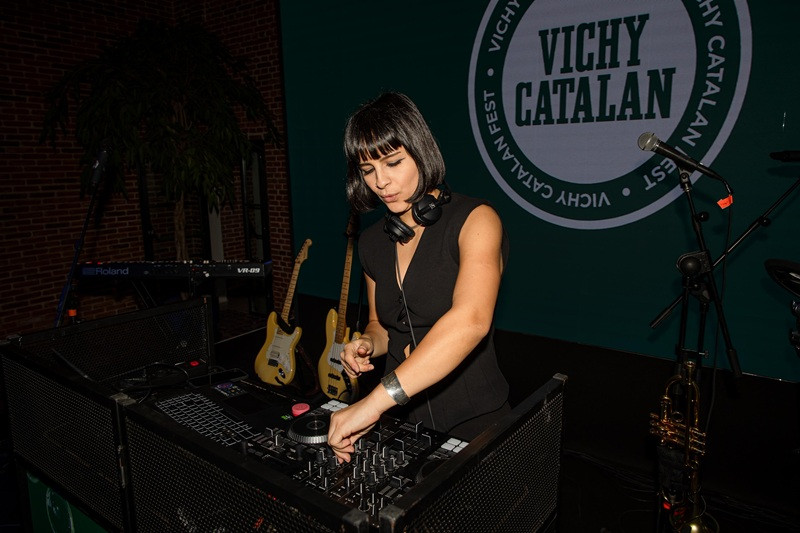
“DJ booth” can refer to the equipment the DJ uses to mix tracks or to the cabinet that houses it. Please clarify. A well-decorated DJ desk can work perfectly well at a simple event; a black or white front panel can blend in better at an elegant dinner party; an illuminated structure adds a different kind of presence to the party.
Ask for a photograph of the option included and enquire how much space it takes up. The cost depends on the model, delivery and assembly: a description such as “professional booth” doesn’t tell you what it will look like in your lounge.

Dance lights and lighting to set the mood in the hall
These are two different uses. Basic party lighting can be found around €100–300; a more detailed proposal might range from €300 and €800 or exceed that benchmark if production increases. The price depends on what is installed and how it operates.
The lights that bathe the walls and corners create atmosphere even when nobody is dancing. Those on the dance floor complement the energy of the session. Choosing where to place them usually makes more of a difference than simply adding equipment without a purpose. If you want smoke or other effects, you’ll need to check beforehand that the venue allows them.
On our In the gallery, you can see installations in different spaces. It helps to explain what style you like and what you’d rather avoid, although the specific proposal will then be tailored to your space.
Transport, loading and assembly times
It’s not all about the distance. In the centre of Madrid, there may be difficulties with access or parking; at a rural property, you may need to transport more equipment. Ask whether the return journey, any tolls, parking and accommodation (where applicable) are included.
Stairs, the distance from the unloading point and the time available are also important. If everything has to be ready in the morning, but the session doesn’t start until the evening, there are logistical issues or a wait involved that aren’t apparent in “four hours of music”.
Extensions and overtime
As a rough guide, an additional hour can be estimated to be between €75 and €250. Agree on the cost and who can authorise it. The availability of the equipment and the venue’s opening hours are also important; just because the guests want to carry on doesn’t mean it’s always possible.
Keep the performance time separate from the waiting time. A delay to the banquet shouldn’t end up causing an argument if you’ve explained beforehand how it will be handled.
When is it worth hiring a sound technician?
A simple event does not always require another person: the operation of the equipment can be incorporated into the service. However, if there are several microphones, musicians, video screens or zones in use at the same time, it is worth considering hiring a dedicated technician.
Their work makes it possible to monitor levels, connections and inputs whilst the DJ carries on with the set. The practical question is this: Who sorts out a sound problem whilst the next song is coming on? The technician’s hours and responsibilities must be recorded under a specific entry.
Live musicians
A saxophone, a guitar, a singer or percussion can completely transform a cocktail party or a celebration. As well as the musician, you need to agree on the set times, breaks, the set list and the sound requirements.
Please confirm whether the proposal includes travel and equipment for the performance. A set-up suitable for a DJ session may not necessarily be adequate for multiple vocalists or instruments. At Aleea, we can recommend the right combination and set-up depending on the atmosphere you wish to create.
Cheap things end up costing you more when something important is missing
An affordable professional can be a great fit for a simple celebration. The problem isn’t paying too little for their services, but hiring them on the assumption that certain issues have been sorted out when, in reality, nobody has taken them into account.
At a wedding, playing the wrong song as the couple enter cannot be put right by simply handing back a few euros. A microphone that makes it impossible to hear the vows, a set-up that arrives late or a photographer who ignores the arrangements can ruin moments that can never be repeated. That is why it is worth checking the preparation and coordination, as well as the equipment.
- What’s missing from the price. If you then have to hire speakers, organise transport and find microphones, the initial quote is no longer a useful point of comparison.
- What nobody has asked. Preferences, restrictions, age groups, tickets and timings all need to be discussed. Not every event can be organised using the same approach.
- What happens if something changes. A delay, a technical glitch or an unexpected intervention requires someone to take responsibility and a plan.
- What is not set down in writing. Opening hours, payments, extensions and cancellations must be clarified before booking.
Paying more isn’t a substitute for these checks either. Ask for examples of similar jobs and describe a specific situation: “There’ll be a presentation, followed by dinner and then a dance.” The answers will help you decide whether the service is right for you.
How to properly compare two proposals
Use the same template for both. If one includes material and the other does not, add what is missing first before looking at the differences. This short list helps to avoid a lot of confusion:
- What is covered: venues and moments of the celebration.
- When: arrival, set-up, sound checks, start and end of the music.
- Who: DJs, musicians and technical staff, if any.
- With what: sound, microphones, DJ equipment, furniture and lighting.
- How much: Total, including taxes, travel, booking fees and any potential surcharges.
For example, a more comprehensive package that already includes sound equipment may work out cheaper than hiring a DJ and booking equipment separately. And if the venue has suitable facilities, you may not need to pay for additional set-up. The important thing is to get someone to confirm that everything is compatible.
Another point to note: a four-hour session does not necessarily mean four hours of work. Preparing the music, loading up, travelling, setting up, checking everything and packing away are also part of the service. That time accounts for differences that an hourly rate fails to take into account.

How to save money without the party noticing
Start with the essentials: good sound, preparation for the key moments and plenty of time. Then decide what the aesthetics bring to the event and which extras you’re really keen on.
At an intimate dinner party, a discreet DJ booth and warm lighting may be more appropriate than a large dance floor with special effects. If there are two separate spaces, it might be better to invest in ensuring continuity between them. If the venue’s existing set-up works well, making the most of it can reduce the need for transport and equipment.
At Aleea, we organise all kinds of events. You can tell us your budget, what the venue is like and what you’re hoping to achieve with the event. With that information, we can advise you on what to keep, what to simplify and what’s worth adding. The aim is for you to understand the proposal so that you can make an informed choice.
Some questions that often come up
What does a four-hour session usually involve?
It depends on the quote. It could be just the performance, or a package including sound, a control booth and lighting. Before comparing quotes, ask for the timetable, the equipment included and the final cost, including travel and taxes.
Can we make use of the sound from the estate or the restaurant?
Yes, provided it is suitable for its intended use. You need to check the connections, coverage and who will be operating it. A system designed for background music may not be up to the job for a dance floor.
Is a separate sound engineer always needed?
No. For a simple set-up, sound management can be included as part of the service. It is advisable to hire a technician when there are several microphones, performances, videos or venues operating at the same time.
What happens if we want to keep the party going?
Make sure you agree on the price of the extension and who can authorise it. You’ll also need to bear in mind the venue’s opening hours and confirm that the service is available; it’s not a good idea to leave everything to the last minute when the party’s in full swing.
How do we adjust the budget without falling short?
Start by considering the right sound, the preparations and the time you’ll need. Then choose the venue, lighting and any musicians. Explaining your available budget allows you to propose a realistic set-up and prioritise what adds the most value.