



There are moments at a wedding that only happen once: a reading by a loved one, the vows, an unexpected toast. To enjoy them, it’s not enough just to have speakers. The words need to be understood, the music needs to start at the right moment, and someone needs to know what to do if the programme changes.
The sound of the party tends to be the main focus when booking a venue, but the event has very different requirements at different times of the day. Listening to an outdoor ceremony, chatting during the cocktail reception and dancing after dinner do not necessarily require the same sound system or the same volume.
This guide helps you to check every area and allocate responsibilities amongst the venue, the DJ and the other professionals. You don’t need to become technical experts: you just need to know what questions to ask.
Table of contents
Start by thinking about the spaces and what will happen in each one
Before deciding on the venue, map out the wedding itinerary. Will the ceremony be in the garden? Will the drinks reception take place on a different terrace? Will you be having dinner and dancing in the same room? Will there be speeches, videos or live music?
Next to each venue, note down what needs to be heard and at what time. This map helps you identify the requirements that a «wedding sound» quote might fail to specify. It also helps you work out whether activities overlap and whether it is feasible to move equipment.
The useful question is, «Can you hear clearly what is happening in each area?». The number of guests is important, but it is not the only factor in choosing the speakers. The layout, distances and acoustic conditions all influence the solution.
The ceremony: understanding the words and managing the entrance
At the ceremony, clarity is the priority. You don’t want the front row to hear it too loudly whilst those at the back miss what’s being said. The sound engineer must assess the audience’s position and set up the sound system with the area to be covered in mind.
Set out who will speak and from where: the celebrant, family members, the bride and groom, or anyone else making a brief contribution. You cannot prepare in the same way for a single fixed speaker as you would for several people who are moving around or reading from different locations.
Microphones need a bit of preparation
Test them beforehand, from the points of use and with someone listening in the guests’ area. Whoever is going to read should know how to hold the microphone, the approximate distance to speak from it, and where the sound is picked up. A brief test ensures that the first important sentence isn’t also the first thing you have to check.
If you’re sharing a microphone, agree on how it will be passed from one person to another. If the celebrant is using a different setup, check that they’re prepared and find out who’s in charge of their sound levels. It makes no sense for the bride and groom to have to sort this out just as the ceremony is beginning.
Make it clear when silence is required. Background music playing as people arrive can make it difficult to read if nobody turns it down or stops it. Just because a song is lovely doesn’t mean it has to be playing throughout every speech.
Every entry requires a signal, not just a time
Choose the exact version of the songs and decide where they start. Sometimes you’ll want the full introduction; other times, you’ll want to jump straight to the bit that moves you. It’s also a good idea to specify whether the piece ends, fades out gently or continues whilst the next person takes their place.
An estimated time helps with organisation, but it is no substitute for a signal from someone who can see that everything is ready. The DJ needs to know who is confirming the arrival, when the bride and groom have reached their positions, and what happens if the procession takes longer than expected.
The musical details of the entrance, the kiss and the exit are set out in the wedding music planning guide. The key here is to have music ready for every moment and a clear way of playing it.
The cocktail party: live music and relaxed conversation
The cocktail party calls for a different kind of balance. People greet one another, discuss the ceremony and move between groups. The music can lend character to the atmosphere without forcing those standing near the sound system to shout to be heard.
When a space is large or has separate areas, installing a single system does not always improve coverage. It may make more sense to distribute the sound in a different way. That decision should be made by someone who is familiar with the venue and the installation, taking the use of the space into account.
Also discuss the DJ’s position. If it’s too far away from the main area, it will be harder to gauge the audience’s reaction. The location must take into account the visuals, the sound and the ability to observe the atmosphere.
If there are musicians, the requirements change
Whether it’s a guitar, a saxophone or a vocalist, you need to check their connection, the balance with the rest of the session and what the artist can hear whilst performing. Don’t assume that equipment suitable for playing back music will automatically be suitable for any live performance.
The proposal must include the instruments, vocals, rehearsals and the soundcheck. If you’re considering this format, you can see how to choose musicians to accompany the DJ depending on the atmosphere you’re looking for.
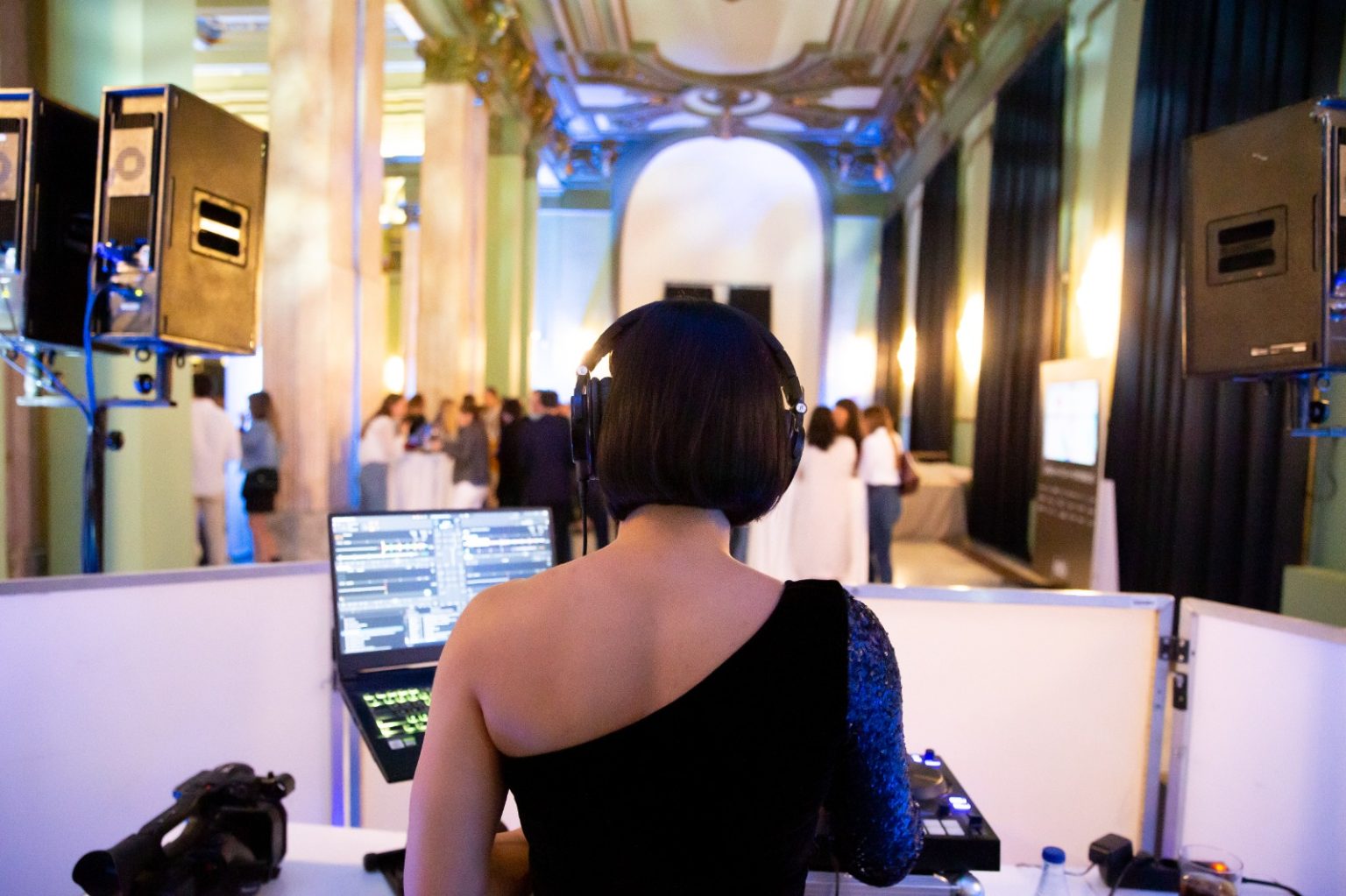
The reception: announcements, toasts and videos that everyone can understand
During lunch or dinner, the sound usually fades into the background until someone speaks. And that is precisely why it’s a good idea to have it ready: a toast might be called when everyone is seated far away from the sound booth.
Indicate where speeches will take place and whether anyone needs to move. Confirm who will hand over the microphone, who will turn down the music, and who will notify the kitchen or front-of-house staff if a speech requires a break. Good coordination ensures that the toast does not clash with another part of the service.
If there is a video, ask for it to be tested using the final file on the system that will be used. Just seeing a picture does not prove that the audio is reaching the system. We need to check the playback, sound and start signal together.
The content may come as a surprise to the bride and groom, without being a technical surprise for the professionals. A trusted person can deliver the material and coordinate this in advance whilst keeping it a secret.
The party: energy on the dance floor without losing control of the space
When it comes to dancing, the focus changes. You want to feel the music and for the dance floor to make an impact, but the set-up must take the venue and its layout into account. A relaxation area or some nearby tables may require a different balance.
There is no reliable «so many watts per guest» rule that applies to every wedding. The size and shape of the venue, the materials used and the positioning of the equipment all play a part. Ask for a solution tailored to the actual venue and let them know if there will be guests who prefer to chat near the dance floor.
Please confirm the venue’s restrictions and closing time before finalising the proposal. If there is a security system or specific conditions of use, the DJ and technical team must be made aware of them. The aim is to ensure a positive experience within those conditions.
If the offer is presented as a party package, check that what a mobile disco usually includes and what needs to be confirmed. Sound, lighting and performance times must be described separately where they affect the scope of the service.
| Moment | Priority | What to check |
|---|---|---|
| Ceremony | Clear wording and precise entries. | Microphones, song covers and signals. |
| Cocktail | Atmosphere and conversation. | Coverage, volume and the needs of musicians. |
| Banquet | Speeches and specific topics. | The speaker’s location and video evidence. |
| Party | Energy and track coverage. | Layout, equipment and conditions of the venue. |
| Transitions | Continuity between spaces. | Systems in place, timelines and those responsible. |
Change venues without keeping the wedding guests waiting
On a venue with several different areas, the transition must also be planned. One team may remain at the ceremony whilst another is already ready for the cocktail reception. Or some of the equipment may be moved during a break when it is not needed. The important thing is that this move is feasible and that someone is in charge of it.
Ask for the route from the drop-off point, access times and distances between areas to be reviewed. A change that seems straightforward on a map may take time if there are stairs, paths or guests moving about.
If two activities take place at the same time, do not assume that the same equipment can be used in both places. Nor is it advisable to rely on a single operator for two simultaneous operations without considering how they will be managed.
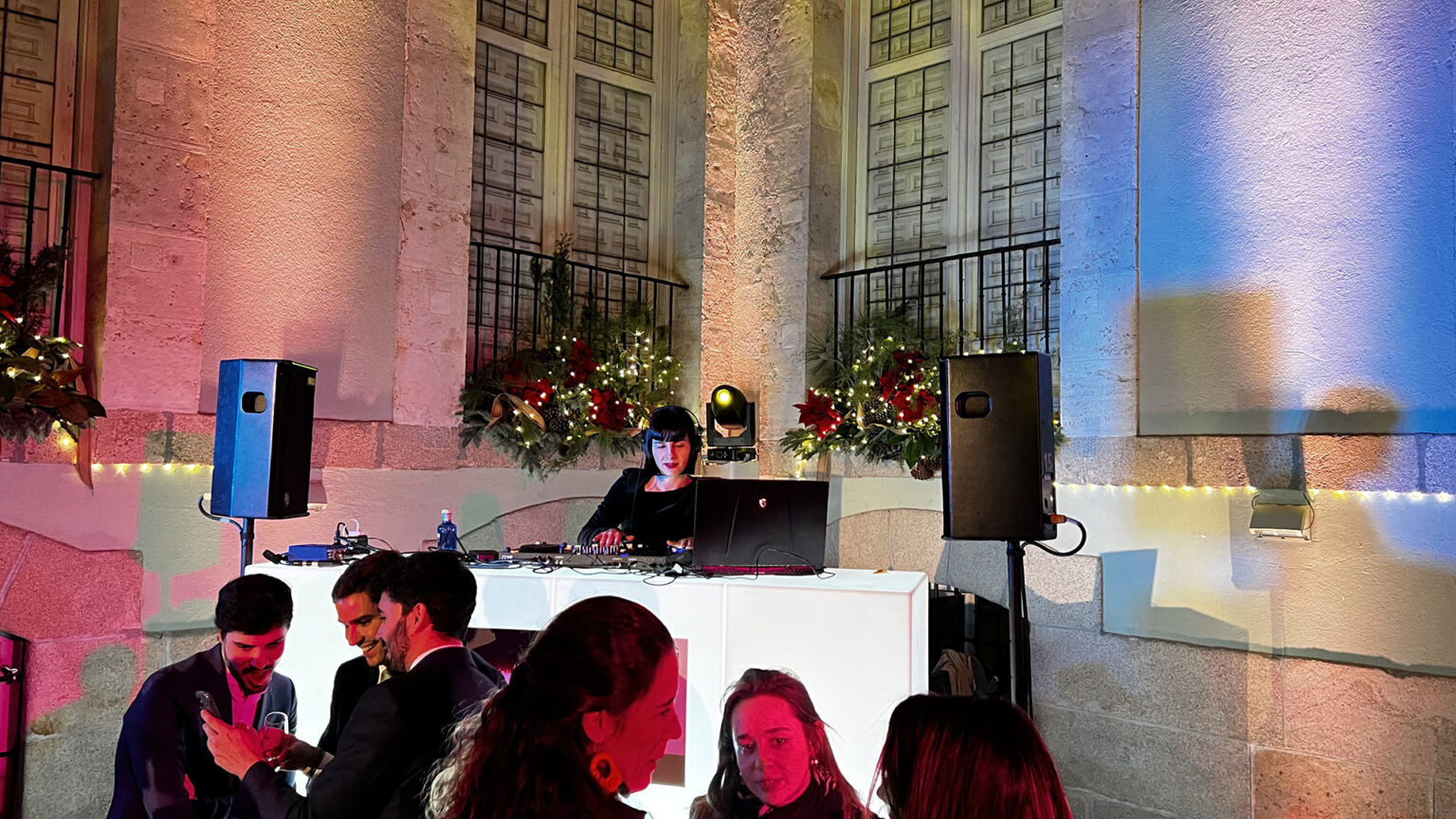
Exterior and alternative plan: what needs to be agreed with the estate
For an outdoor set-up, you need to ensure protection from the sun, rain and wind, a stable location and a suitable power supply. These arrangements are coordinated with the venue and the professionals installing the equipment; they are not details that can be improvised once the guests have arrived.
If there is an indoor alternative, specify where the sound will be set up, when the decision to switch venues will be made, and how much time is needed to prepare it. Saying «We have a hall in case it rains» does not explain whether it will be available or whether the music and microphones can be set up in time.
Electricity, access and space restrictions must be checked with the relevant people in charge. You can put them in touch and explain the programme, without having to choose connections or sort out the installation yourselves.
When is it worth having a dedicated technician?
In a simple set-up, sound management can be included as part of the DJ service. At an event featuring live musicians, where several microphones, video screens or different areas are in use simultaneously, it is advisable to have someone dedicated to these tasks.
It’s not about adding staff as a matter of course. It’s about asking who is monitoring a microphone that can no longer be heard whilst the DJ is preparing a musical transition or providing backing for a live performance. If that monitoring requires being in two places at once or managing several changes simultaneously, the proposal needs to address this.
Agree on what the technician is responsible for, when they carry out the tests and at what times they are present. The person who sets up the equipment does not always remain on site operating it all day: it is important to distinguish between these two responsibilities.
What to send to get the sound sorted without any hassle
With just a few details, you can start a useful conversation: the venue’s location, the approximate number of guests, the timetable, photos or a floor plan of the spaces, and a list of the programme items. Include details of what equipment the venue provides and the contact details of someone familiar with the venue.
- Ceremony: audience distribution, speakers and musical interludes.
- Cocktail: venue, atmosphere and potential musicians.
- Banquet: toasts, presentations, videos and the location from which the speech is delivered.
- Party: the track, timetables and the areas that have to coexist with it.
- Changes: alternative due to weather conditions and the person who approves each decision.
At Aleea, we can recommend a set-up tailored to your needs and coordinate the music with the venue and the organisers. The wedding service It’s put together with those moments in mind, taking into account your tastes and the atmosphere as it develops. The important thing is that the band complements the celebration and that you can listen, chat and dance when the time is right.
Some questions that often come up
Is one set of equipment enough for the whole wedding?
It depends on the venues and timings. It can work if everything takes place in one area or if travel between venues is feasible. When there are simultaneous activities or separate venues, more than one system may be required.
How do we know if there will be enough speakers?
The choice must take into account the layout, acoustics, distances and intended use of each space. The number of guests and the wattage alone are not sufficient to determine a suitable installation.
Is it necessary to test the microphones before the ceremony?
Yes, it’s a good idea to set them up where they’ll be used and check the sound from the guests’ area. Anyone who is due to speak should also know how to pick up and use the microphone.
Can the estate provide the sound?
It can be a useful facility, but you need to check its coverage, connections and condition, as well as agree on who will operate it. Make sure it is suitable for each planned activity.
When do you need a sound engineer?
It is worth considering if there are several microphones, musicians, video feeds or simultaneous events that require dedicated attention. In a straightforward set-up, this can be incorporated into the DJ service.
What do we need to bear in mind if the wedding is outdoors?
Installation protection, location, power supply, site constraints and a viable alternative. Agree with the venue who will decide on the change and how much time is needed for preparation.